
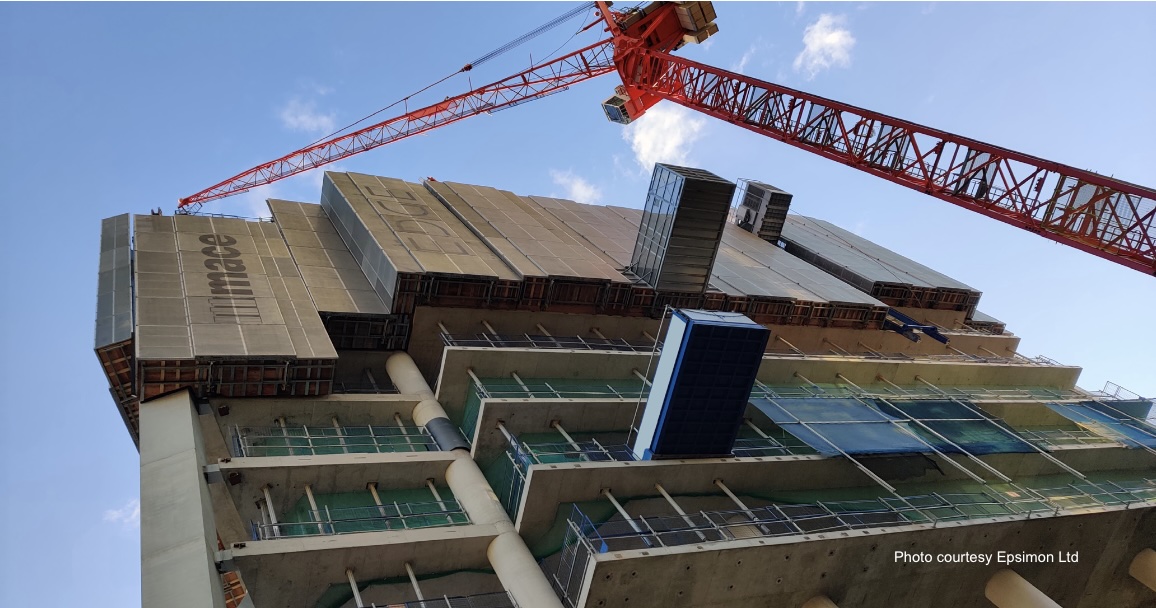
Piles can account for 10–30% of a building’s embodied carbon, yet foundation designs often rely on conservative assumptions. At Edge London Bridge, a 27-story building on a piled raft, Tyréns AKT used fibrisTerre Brillouin distributed strain and temperature sensing to validate those assumptions against field data. Fiber-optic cables attached to reinforcement cages instrumented two 35 m piles, two plunge columns, and a section of the raft. Hourly profiles over 30 months captured ground-heave tension and pile–raft load sharing at every construction stage. The calibrated models have since enabled smaller piles on subsequent projects, saving concrete, cost, and carbon.
Let us help you decide how this technology will provide the data you need to reduce risk and optimize operation. Contact us and share your thoughts.